Carrot Peas Design: A Practical Embroidery Review
When evaluating a new machine embroidery design for my studio, I look past the digital preview and focus entirely on how the file translates to fabric. The Carrot Peas Design immediately caught my attention as a potential staple for kitchen textiles and children’s apparel. As an experienced designer and product reviewer, I have stitched out countless food-themed motifs, and I know that what looks crisp on a screen can sometimes become a dense, puckered mess on actual material. This review breaks down the real-world performance of this specific embroidery file, analyzing its suitability for commercial production, personalized gifts, and everyday crafting.
First Impressions and Visual Personality
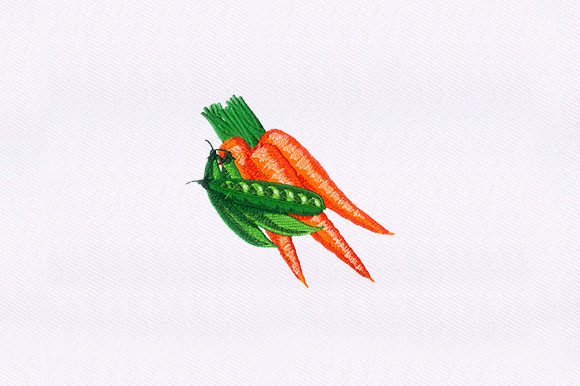
My initial assessment of the Carrot Peas Design is that it carries a distinctively cheerful, organic aesthetic. Unlike rigid, geometric food icons, this layout suggests a playful arrangement that feels hand-drawn rather than digitally manufactured. For an Etsy seller or boutique owner, this visual warmth is crucial. Customers looking for handmade products often reject designs that appear too industrial or clip-art-like. The interplay between the elongated carrot shapes and the circular peas creates a natural rhythm that guides the eye without feeling cluttered.
From a technical digitizing perspective, the balance between negative space and stitch coverage appears well-considered. In food embroidery, there is a constant risk of over-digitizing; too much fill stitch density makes a tea towel stiff, while too little leaves gaps in the fabric. This design seems to strike a middle ground, utilizing texture to define the vegetables rather than relying solely on heavy saturation. This characteristic makes it particularly promising for projects where drape and softness matter, such as baby bibs or lightweight aprons.
Real-World Application: The Custom Tea Towel Test
To truly judge this asset, I mentally placed it in a specific production scenario: creating a line of custom embroidered tea towels for a spring market launch. Tea towels are a high-volume item for many craft businesses, but they are unforgiving. Linen and cotton terry textures can swallow fine details, and frequent washing demands durable construction.
In this context, the Carrot Peas Design serves as an excellent focal point. If I were stitching this onto a flour sack towel, I would position it in the lower third corner to allow for functional folding. The design’s composition allows for easy integration with monograms or custom text above it, which is essential for personalized gifts. For a client requesting a "Garden to Table" themed set, this motif provides the necessary illustrative anchor without overwhelming the textile. Furthermore, because the file formats include versatile options like DST, PES, JEF, and VP3, I can confidently load this into multiple machine brands in my shop without worrying about conversion errors corrupting the stitch path.
Fabric Compatibility and Stabilizer Strategy
While the design is versatile, it requires thoughtful preparation depending on your chosen substrate. As with any professional embroidery project, success lies in matching the stabilizer to the fabric weight.
- Woven Cottons and Linens: These are the ideal homes for this design. Use a medium-weight cut-away or tear-away stabilizer to prevent shifting. The natural weave supports the satin stitch outlines likely present in the vegetable stems.
- Stretchy Knits and Sweatshirts: If you are applying this to custom apparel like a toddler’s sweatshirt, you must use a fusible no-show mesh stabilizer. The organic shapes of carrots and peas can distort easily on knit fabric if the hoop tension isn't perfect. Consider adding a water-soluble topping to keep stitches from sinking into the fleece nap.
- Terry Cloth and Toweling: Always use a water-soluble topping. Without it, the loops of the towel will poke through the fill stitch areas of the peas, ruining the definition. A spray adhesive is also recommended here to secure the fabric without excessive hooping marks.
- Dark Fabrics: Be mindful of contrast. Orange carrots and green peas rely heavily on value contrast against the background. On navy or black fabric, ensure your thread colors are bright enough to pop, or add a subtle outline to separate the design from the dark base.
Technical Considerations for Small Business Owners
For those selling finished goods or using this as part of a larger collection of design assets, consistency is key. Before listing a product featuring the Carrot Peas Design, verify the physical dimensions against your intended hoop size. While the file compatibility list (including ART, HUS, PEC, and EXP) ensures broad machine access, it does not guarantee the design fits every hoop variant. Always check the specific millimeter dimensions in your software before purchasing or stitching.
I also recommend testing the stitch density on scrap fabric first. If you plan to scale the design up or down significantly, remember that resizing affects density. Enlarging may create sparse coverage, while reducing can cause thread breaks and needle damage due to packed stitches. For commercial embroidery runs, keeping the design within 80% to 120% of its original size usually maintains the digitizer's intended integrity.
Enhancing Product Value and Customer Trust
The quality of your stitching directly influences perceived value. When a customer buys an embroidered patch or a nursery pillow, they are paying for durability and aesthetics. The Carrot Peas Design offers an opportunity to showcase precision. Clean transitions between color blocks and smooth curves signal professionalism. Conversely, poor registration or bobbin thread showing on top suggests amateur work.
For sellers creating printable mockups or digital previews, ensure your representation matches reality. Do not use a flat vector image if the actual stitch-out has texture. Buyers appreciate seeing accurate photos of the finished product so they understand exactly what they are receiving. This transparency builds trust and reduces returns. Additionally, always confirm the licensing terms associated with this digital embroidery file. Knowing whether you have rights for unlimited physical sales or limited digital distribution protects your business legally and ethically.
Final Verdict for Makers and Designers
After reviewing the structural elements and potential applications, the Carrot Peas Design stands out as a reliable, charming asset for the food and home decor niche. It avoids the trap of being overly generic by offering a layout that feels curated and intentional. Whether you are embellishing a baby blanket, branding a farm-to-table restaurant’s staff aprons, or creating unique holiday gifts, this design provides a solid foundation.
However, treat it with the respect due to any specialized tool. Test your thread colors against your specific fabric palette. Verify that your machine reads the 10O or CND formats correctly if you are using older or industrial equipment. Most importantly, let the design serve the project, not the other way around. When executed with proper stabilization and attention to detail, this motif elevates simple textiles into cherished, professional-grade handmade items. For the serious maker, it is a worthy addition to the digital library, provided you approach the stitch-out with patience and preparation.