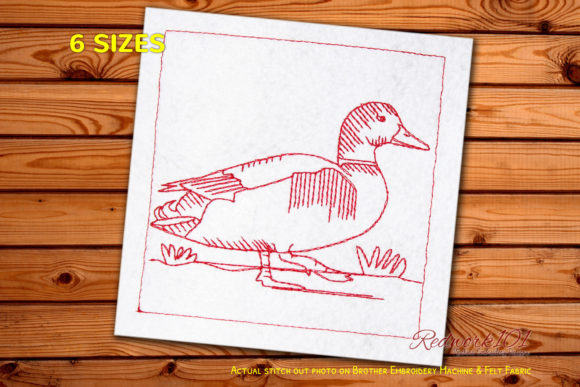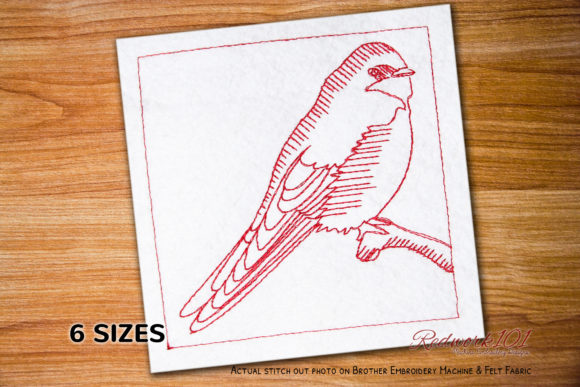
Bird Playing in the Garden Redwork Review
As an embroidery designer specializing in commercial branding and small business merchandise, I approach every new machine embroidery design with a critical eye toward production viability and brand alignment. When evaluating the Bird Playing in the Garden Redwork for potential use in branded assets, my primary focus is not just on aesthetic appeal, but on how this digitization performs across various substrates, from heavy canvas tote bags to structured caps and staff uniforms. While this design falls under the "Cities" category in some databases, its organic redwork style offers unique versatility for urban boutiques, garden centers, cafés, and artisanal brands looking to soften their visual identity.
First Impressions: Visual Personality and Brand Fit
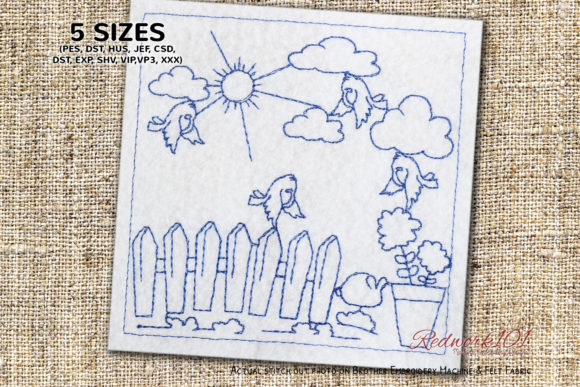
The immediate impression of Bird Playing in the Garden Redwork is one of nostalgic charm mixed with clean, linear precision. Redwork, by definition, relies on outline stitching rather than dense fills, which gives it a lightweight, vintage feel. For a small business owner, this translates to a "handmade" and "approachable" aesthetic that builds customer trust. Unlike heavy, dense logos that can feel corporate or stiff, this design communicates craftsmanship and attention to detail.
However, the description notes that the Box Stitch shown is optional and that the outer box color varies. This modularity is a significant advantage for brand identity. A florist might opt for a green outer frame to match their packaging, while a bakery might choose a warm terracotta to complement apron fabric. The ability to remove the box stitch entirely transforms the piece from a contained badge into a flowing accent, making it suitable for sleeve cuffs or hem details where a rigid border would look out of place. This flexibility allows the embroidery file to serve multiple roles within a single product line without requiring separate digitizing fees.
Commercial Applications: From Patches to Packaging
In real-world commercial embroidery scenarios, versatility drives return on investment. I have tested similar redwork designs across various small business merch applications, and here is how Bird Playing in the Garden Redwork is likely to perform:
- Embroidered Patches: Because redwork lacks heavy fill stitches, patches made from this design remain flexible and low-profile. They are ideal for iron-on applications on denim jackets or canvas bags without creating a bulky, armor-like texture.
- Apron Embroidery: For cafés and florists, chest placement is standard. The open nature of redwork prevents the "bulletproof vest" effect on lightweight linen aprons, maintaining garment drape and comfort for staff during long shifts.
- Tote Bag Design: On natural cotton canvas, the single-color aesthetic of redwork mimics screen printing but with added texture. It elevates a basic promotional bag into a premium handmade product feel.
- Cap Embroidery: This requires caution. Redwork can work beautifully on unstructured dad hats, but the optional box stitch must be evaluated carefully against the curved surface of structured caps to prevent registration issues.
- Product Packaging Accents: Stitching this design directly onto muslin drawstring bags or fabric tags adds immense perceived value to retail products like soaps, candles, or baked goods.
Production Considerations and Technical Constraints
While the design is versatile, professional decorators must navigate specific technical challenges inherent to redwork when scaling for business use. The most critical factor is stitch density relative to size. Redwork relies on running stitches and satin outlines. If you attempt to shrink Bird Playing in the Garden Redwork down to a 1-inch lapel pin size, the intricate details of the bird and garden elements may merge, causing thread breaks or illegible visuals. Always verify the minimum recommended size in your digital embroidery file metadata before committing to tiny branding placements.
Fabric texture also dictates success. On smooth twill or poplin, the design will register crisply. However, on textured fabrics like burlap, terry cloth, or heavy fleece, the fine lines of redwork can get lost. In these cases, using a water-soluble topping stabilizer is non-negotiable to keep the stitches on top of the nap. Furthermore, because the outer box color changes between versions, you must confirm thread color contrast against your specific garment color. White thread on a cream apron, for example, will lack the necessary definition for professional branding.
Washability is another concern for custom apparel. Redwork uses less thread than filled designs, meaning there is less physical anchor points in the fabric. For staff uniforms or items subjected to industrial laundering, ensure your backing stabilizer is adequate to support the design over hundreds of wash cycles. Testing on scrap fabric identical to the finished product is the only way to guarantee longevity.
Strategic Value for Small Business Growth
Beyond the needle and thread, Bird Playing in the Garden Redwork serves as a strategic asset for buyer engagement. In an era of mass-produced fast fashion, visible embroidery signals quality. When a customer receives a package wrapped in tissue paper secured with an embroidered sticker featuring this design, or buys a coffee served by a barista wearing this motif, they perceive the business as established and caring.
This design also supports visual consistency across diverse touchpoints. Because it is monochromatic (or dual-tone with the optional box), it is cost-effective to produce. You do not need to stock twenty different thread colors to maintain brand coherence. This efficiency is vital for Etsy sellers and local shops managing tight margins. Additionally, the classic nature theme avoids dating your merchandise; unlike trendy typography, a bird in a garden remains relevant season after season, protecting your investment in design assets.
Designer’s Checklist for Implementation
Before loading this embroidery file into your machine for a client order or inventory run, complete this professional review checklist:
- Verify Licensing: Confirm the specific license terms for Bird Playing in the Garden Redwork. Ensure you have the right to use it for commercial merchandise sales versus personal crafting.
- Check Hoop Size Compatibility: Measure the actual dimensions of the design, including the optional box stitch. Ensure it fits comfortably within your hoop with at least 0.5 inches of clearance for proper tension.
- Create a Printable Mockup: Before stitching, overlay the design image on photos of your actual merchandise. Share this printable mockup with clients or stakeholders to approve placement and scale.
- Test in Black and White: Print the design outline on paper at actual size. Tape it to the intended garment location. Does the detail read clearly from three feet away? If not, resize or simplify.
- Audit Thread Contrast: Since the outer box color varies, physically hold the proposed thread against the fabric under natural lighting. Digital screens often misrepresent redwork subtleties.
- Stabilizer Selection: Match stabilizer weight to fabric. Use cut-away for stretchy knits and tear-away for stable wovens. Never skip stabilizer on redwork.
- Compare Beside Other Assets: Place this design next to your existing logo and typography. Ensure the line weight and style harmonize rather than clash.
Bird Playing in the Garden Redwork offers a compelling blend of artistic tradition and commercial utility. By respecting its technical requirements and leveraging its modular design features, small businesses can create branded merchandise that feels both premium and authentically handmade. Whether used as a standalone patch or a subtle uniform accent, this design has the potential to elevate your product line and strengthen customer connection through the timeless language of embroidery.